
How to Start a Dump Trailer Business
How to start a dump trailer business in 2026: services, equipment, insurance, DOT rules, pricing, tipping fees, marketing, and sample unit economics.
By Strank Trailers14 min read
The short version
- Most dump trailer businesses combine two or more services: dumpster-style trailer rentals, junk removal, material delivery, and construction cleanouts.
- In published price lists checked in late 2026, dumpster-style trailer rentals ran about $345 to $425 for one to three days, with 1 to 2 tons included and $80 to $100 per ton over.
- Landfill tipping fees averaged about $62 per ton nationally in EREF's survey of 2024 rates and range from about $45 in the South Central states to about $81 in the Northeast, so disposal is your biggest variable cost.
- Commercial auto insurance, a USDOT number for qualifying operations, and local hauling permits are the paperwork most new operators overlook.
- In a rental business, every day a trailer is down for repairs is lost revenue, so durability shows up directly on your profit and loss statement.
On this page
- What services can a dump trailer business offer?
- What equipment do you need?
- Insurance for a dump trailer business
- Licensing, permits, and DOT requirements
- How to price dump trailer services
- Landfill tipping fees and disposal costs
- How to market a dump trailer business
- An illustrative example of dump trailer unit economics
- Why trailer durability matters to uptime
- A simple startup checklist
- The bottom line
To start a dump trailer business, you pick the services you will offer (trailer rentals, junk removal, material delivery, or cleanouts), buy a truck and trailer rated for the loads you will haul, set up insurance and the licenses your state and city require, price your work around local disposal costs, and market to homeowners and contractors. The startup cost is modest compared with most trucking businesses, which is why so many people try it. The ones who last are the ones who understand their numbers and keep their equipment working.
This guide walks through each step with 2026 price ranges, the paperwork, and an illustrative example of how the money flows.
What services can a dump trailer business offer?
Most operators combine services so the trailer earns money in more than one way. The four most common:
| Service | What you do | How it is usually priced | Main cost |
|---|---|---|---|
| Dumpster-style rental | Drop the trailer, customer loads it, you haul and dump | Flat fee with tonnage included, plus overage | Tipping fees |
| Junk removal | You load and haul the customer's items | By volume (fraction of a load) | Labor and tipping fees |
| Material delivery | Haul mulch, gravel, topsoil, or sand to customers | Per trip plus material markup | Fuel and time |
| Construction cleanout | Haul debris for contractors, roofers, remodelers | Per load or per ton, often recurring | Tipping fees, heavy loads |
Dumpster-style trailer rentals
This is the service most people mean by a "dump trailer business." You drop a trailer in a customer's driveway, they fill it over a few days, and you pick it up and dump it. Compared with a roll-off dumpster, a dump trailer is lower to load, sits on tires instead of steel rails (gentler on driveways), and can be placed in tighter spots.
The work is predictable and doesn't require a crew. The risks are customers who overload the trailer, put prohibited items in it, or damage it.
Junk removal
With junk removal you do the loading, so you charge more per load. It pairs well with rentals because some customers want full service. It takes more labor, a second person for heavy items, and a plan for items landfills charge extra for or refuse, such as mattresses, tires, appliances with refrigerant, electronics, paint, and other hazardous materials.
Material delivery
Landscapers and homeowners often need a few yards of mulch, gravel, or topsoil but don't want to pay a full-size dump truck minimum. A dump trailer with a spreader gate can deliver and spread small loads. Know your weight limits: a 14,000 lb trailer typically carries only 3 to 4 yards of gravel or wet soil. The material weight chart shows how many yards of each material fit within a given payload.
Construction cleanouts and contractor work
Roofers, remodelers, and general contractors generate steady debris. A standing arrangement with a few contractors can smooth out the seasonal ups and downs of residential work. Be careful with roofing: a single-layer tear-off commonly runs 250 to 400 lb per roofing square (100 sq ft), so a 25-square roof can produce 6,000 to 10,000 lb of shingles, which can exceed many trailers' payload in one load.
What equipment do you need?
The tow vehicle
Your truck limits everything else. Check its gross combined weight rating (GCWR), towing capacity, rear axle rating, and receiver or gooseneck hitch rating against the loaded weight of the trailer you plan to buy. A 14,000 lb GVWR dump trailer generally calls for a 3/4-ton or 1-ton pickup; larger gooseneck trailers usually need a 1-ton or bigger. What Truck Do You Need to Pull a Dump Trailer? covers the details.
The trailer
For rentals and junk removal, the most common choice is a 7 x 14 ft or 7 x 16 ft tandem-axle trailer with a 14,000 to 16,000 lb GVWR and 3 to 4 ft sides. Taller sides add volume for bulky, light junk; heavier material needs payload, not volume. New 7 x 14 ft, 14,000 lb bumper-pull dump trailers from mainstream brands were listed at dealers for roughly $8,400 to $14,300 in late 2026, with heavier-duty builds and options costing more. Check current dealer pricing and see How Much Does a Dump Trailer Cost in 2026? for a fuller breakdown.
Features worth paying for in a business trailer:
- Barn doors or a combo gate for dumping bulky junk, and a spreader gate if you deliver material. See Dump Trailer Gates.
- A tarp system, because many states require loose loads to be covered.
- A hoist sized for heavy, sticky loads, not just the advertised GVWR. Scissor and telescopic hoists are common on rental trailers.
- A drop-leg or powered jack with a wide foot or pad, so the trailer can sit in a customer's driveway without sinking or cracking concrete.
- A battery charging solution, such as a charge line through the 7-way plug or a solar maintainer, since a rental trailer may sit unhitched for days.
Everything else
Plan for wood boards or pads to protect driveways, tie-down straps, shovels, rakes, a dolly or hand truck, work gloves and other protective gear, wheel or coupler locks to deter theft, and a way to take photos of the trailer at drop-off and pickup. A simple booking and invoicing tool saves a lot of phone time once you are busy.
Insurance for a dump trailer business
Personal auto policies typically exclude business use, so plan on commercial coverage from day one. The usual pieces:
- Commercial auto liability for the truck and trailer combination while on the road.
- General liability for property damage and injuries away from the road, such as a cracked driveway or a customer who trips over the trailer tongue.
- Physical damage or inland marine coverage for the trailer itself, including while it is dropped at a customer's site. Confirm in writing that a detached trailer is covered.
- Workers' compensation once you hire employees; requirements vary by state.
- Umbrella or excess liability if your contracts or customers require higher limits.
Costs vary widely by state, driving record, vehicle, and coverage limits. As one reference point, insurance marketplace Insureon reported in 2026 that its small-business customers paid an average of about $245 per month for commercial auto and about $45 per month for general liability. Dump truck operators paid far more for commercial auto. A pickup-and-trailer operation will likely fall somewhere in between, but get real quotes before you build a budget.
Licensing, permits, and DOT requirements
Business registration and local licenses
Register your business entity with your state, get an EIN from the IRS, and apply for any city or county business license. Then check whether your city or county requires a hauler permit or registration to transport waste or construction debris. Some municipalities grant exclusive franchises to specific haulers for certain waste streams, which can restrict who may haul debris for pay. Call your local solid waste department before you advertise.
USDOT number and federal rules
Under federal rules, a commercial motor vehicle includes any vehicle or combination with a GVWR or GCWR of 10,001 lb or more used in interstate commerce. A pickup pulling a loaded 14,000 lb dump trailer is well over that. If you operate interstate, you generally need a USDOT number from the Federal Motor Carrier Safety Administration, and drivers need a DOT medical card; the vehicles are subject to inspection and maintenance rules. Many states apply similar requirements to intrastate commercial operations. DOT Numbers, Inspections, and Registration for Dump Trailers covers this in detail.
CDL
Under federal rules, a Class A CDL is generally required in commerce when the combination's GCWR is 26,001 lb or more and the towed unit's GVWR is over 10,000 lb. Heavy-duty pickups with high GCWRs paired with 14,000 lb or larger trailers can cross that threshold. Read Do You Need a CDL to Pull a Dump Trailer? before you choose your truck and trailer combination.
How to price dump trailer services
Start with your local market. Call or check the websites of competing trailer rental, roll-off dumpster, and junk removal companies, and build your prices from your own costs, especially tipping fees. The ranges below come from published price lists checked in late 2026 and recent cost guides; they vary by region, season, and competition.
Dumpster-style trailer rentals
The common model is a flat fee for a set rental period with some tonnage included, plus a per-ton overage charge. Published examples:
- A North Carolina operator lists $345 for a 10-yard trailer and $425 for a 15-yard (7 x 14 ft, 48 in sides) trailer for one to three days, with 2 tons included and $80 per ton over.
- A Tampa Bay operator lists $400 flat for one to three days, including delivery, pickup, and disposal of the first ton, with $100 per ton over.
For comparison, a 2026 roll-off dumpster price guide based on thousands of haulers put typical 20-yard dumpster rentals at about $350 to $500 and 10-yard units at about $250 to $380, with overweight charges of $50 to $100 per ton. Dump trailer rentals often price close to small roll-offs.
Add fees for extra days, prohibited items (mattresses, tires, appliances), and trips where the trailer can't be placed as planned.
Junk removal
Junk removal is usually priced by how much of a truck or trailer the job fills. LawnStarter's cost guide, updated in December 2025, reported an average of about $225 per job, a typical range of $115 to $450, a minimum around $90 for a small load, and about $675 for a full truckload of up to 20 cubic yards. A 7 x 14 ft trailer with 4 ft sides holds roughly 14 to 15 cubic yards, so price your "full trailer" accordingly.
Material delivery
Material delivery is usually priced as a delivery fee plus the material, either marked up from what you pay at the yard or paid directly by the customer. Cost guides in 2026 put local gravel delivery at about $50 to $150 per trip within 10 to 20 miles, and mulch delivery at about $70 to $140. Charge for distance and for small loads that still take a full trip.
Contractor work
Contractors care about reliability and turnaround. Common arrangements are a flat rate per load with a weight cap, or a per-ton rate plus a trip fee. Watch heavy materials closely: concrete, brick, dirt, and shingles reach your payload long before the box is full.
Landfill tipping fees and disposal costs
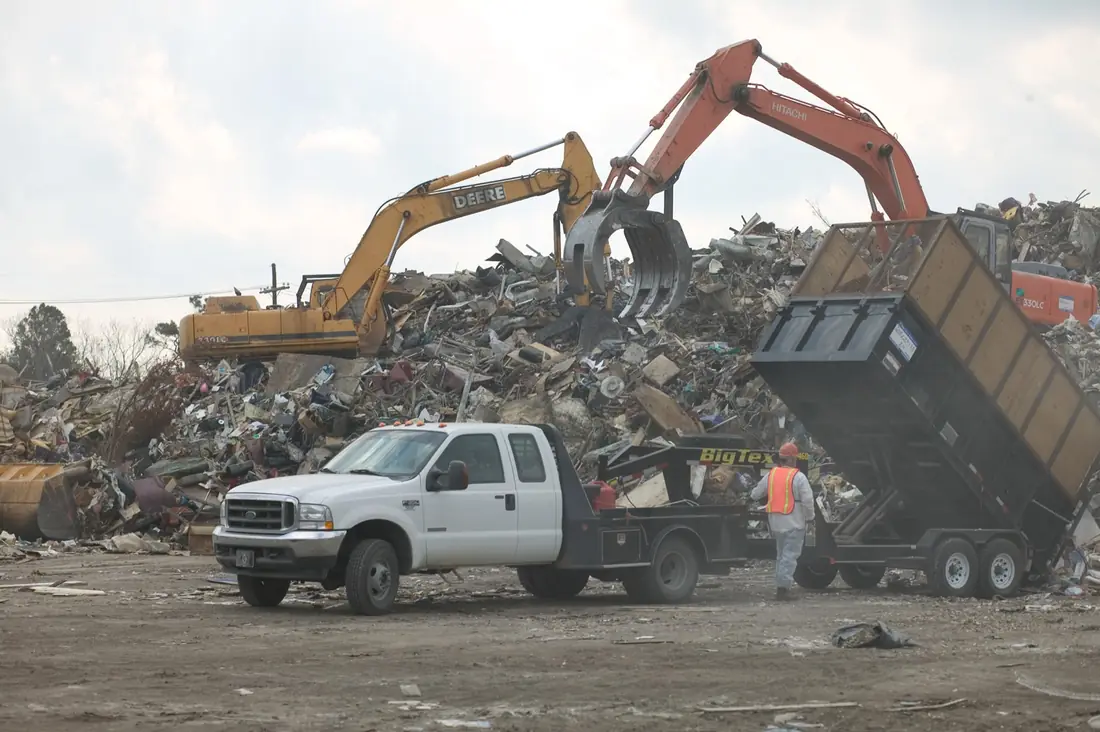
Tipping fees, the charges a landfill or transfer station collects to accept your load, are usually your largest variable cost. In the Environmental Research & Education Foundation's (EREF) survey of 2024 rates, published in 2025, the national average tipping fee for municipal solid waste was about $62 per ton, up about 10 percent from the year before. Regional averages ranged from about $45 per ton in the South Central states to about $81 per ton in the Northeast.

What that means for your business:
- Know your local rates. Call every landfill, transfer station, and recycler within reasonable driving distance. Rates, minimum charges, and accepted materials differ.
- Sort when it pays. Clean concrete, asphalt, brick, dirt, scrap metal, and yard waste can often go to recyclers or compost facilities at lower rates than the landfill, and scrap metal may pay you.
- Price the extras. Tires, mattresses, appliances with refrigerant, and electronics often carry per-item fees or require special handling.
- Factor in drive time. A cheaper landfill 40 minutes farther away may cost more once you count fuel and time.
- Build overage into the price. If your rental includes 2 tons and the customer loads 3, the overage fee should cover the extra tipping fee plus your margin.
How to market a dump trailer business
Most customers find local hauling services by searching on their phone, so start there.
- Google Business Profile. Set it up with accurate service areas, hours, photos of your trailer, and pricing guidance. Ask every satisfied customer for a review.
- A simple website. List your services, service area, prices or starting prices, what is not allowed in the trailer, and a way to book.
- Local groups and referral sources. Neighborhood apps, local social media groups, real estate agents, property managers, and estate sale companies all regularly need cleanouts.
- Contractor relationships. Roofers, remodelers, landscapers, and handymen can become repeat customers. Reliability matters more to them than the lowest price.
- Trailer signage. A clean trailer with your name and phone number sits in driveways for days at a time where the neighbors see it.
Be clear about what customers can and cannot put in the trailer, and about weight limits. Most disputes in this business come from surprises.
An illustrative example of dump trailer unit economics
The numbers below are illustrative only. They are not a forecast or a promise of results, and your local prices, tipping fees, insurance, and truck costs will differ, sometimes a lot. Use the structure and plug in your own figures.
Assumptions for one 7 x 14 ft, 14,000 lb GVWR rental trailer:
| Item per rental | Amount |
|---|---|
| Rental price (2 tons included) | $400 |
| Average overage (0.5 ton at $90/ton) | $45 |
| Revenue per rental | $445 |
| Tipping fee (2.5 tons at $62/ton) | –$155 |
| Truck operating cost (60 miles at an assumed $0.75/mile) | –$45 |
| Owner's time (2.5 hours at an assumed $30/hour) | –$75 |
| Contribution per rental | $170 |
Assumed fixed monthly costs:
| Item | Per month |
|---|---|
| Trailer loan payment (about $13,500 financed, 60 months) | $300 |
| Insurance (illustrative) | $400 |
| Marketing | $300 |
| Phone, software, booking tools | $100 |
| Maintenance and repair reserve | $100 |
| Total fixed | $1,200 |
At $170 per rental and $1,200 in fixed costs, the trailer breaks even at about 7 rentals a month. At 15 rentals, it produces about $1,350 a month before taxes; at 25 rentals, about $3,050. Those figures already pay the owner $30 an hour for their time, but they ignore the purchase of the truck, self-employment taxes, and slow months.
Two sensitivities stand out:
- Tipping fees. If your local rate is $80 per ton instead of $62, contribution drops by $45 per rental, about a quarter of the margin.
- Downtime. If the trailer is out of service for two weeks during peak season and you lose 10 bookings, that's $1,700 in lost contribution before you pay for the repair.
If you are financing the trailer, Financing a Dump Trailer covers loans, leases, and Section 179.
Why trailer durability matters to uptime
In a rental business, the trailer is your product. Rental trailers take more abuse than almost any other dump trailer: customers drop broken concrete from waist height, load everything at the back, overload the bed, and leave it sitting on soft ground in the rain. Then you tow it loaded to the landfill several times a week.
The failures that take a rental trailer out of service are predictable:
- Dished or cracked floors from heavy debris dropped onto thin floor plate with widely spaced crossmembers.
- Hoist and hydraulic problems: undersized cylinders straining with wet or overloaded beds, weak pumps, corroded solenoids, and dead batteries after days unhitched.
- Bent or sprung rear doors and hinges from impacts and from being dragged while dumping.
- Bearing, brake, and tire failures from repeated heavy loads and high mileage.
- Wiring faults from cheap connectors and exposed harnesses in a trailer that is hitched and unhitched constantly.
Each of these costs you twice: the repair bill, and the rentals you turn away while the trailer is in the shop. A trailer that costs $3,000 more but avoids two weeks of peak-season downtime a year can pay for the difference in the first season. Why Cheap Dump Trailers Cost More works through total cost of ownership in more detail, and Best Dump Trailers for Contractors and Construction looks at builds suited to hard use.
A simple startup checklist
- Research your market: competitors, prices, landfill rates, and local hauling rules.
- Choose your services and write down what you will and won't haul.
- Register your business, get an EIN, and obtain local licenses or hauler permits.
- Confirm DOT, CDL, and registration requirements for your truck and trailer combination.
- Get commercial insurance quotes, including coverage for a detached trailer at a customer's site.
- Buy or finance a trailer matched to your truck and your heaviest common loads.
- Set prices based on your costs, with clear included tonnage, overage, and prohibited-item fees.
- Set up your Google Business Profile, website, and booking process.
- Line up disposal sites for each material type.
- Track every job's revenue, tonnage, and costs from the first week.
The bottom line
A dump trailer business is easy to start and harder to run well. Pick a mix of services, buy a truck and trailer that can legally carry your heaviest loads, get commercial insurance and the right registrations, and price around your real disposal costs. Then protect your uptime: in a business where the trailer is the product, a durable trailer is not a luxury, it is your margin.
Frequently asked questions
How much does it cost to start a dump trailer business?
If you already own a capable truck, the main costs are the trailer (roughly $8,000 to $15,000 for a new 7 x 14 ft, 14,000 lb GVWR bumper pull in 2026, more for heavier builds), insurance, business registration, and initial marketing. Many operators start with one trailer for well under $25,000 all in, but costs vary widely by market.
Is a dump trailer business profitable?
It can be, but margins depend on your local tipping fees, pricing, how many rentals you book per month, and how much downtime your equipment has. Work through your own numbers before buying; the example in this guide shows how sensitive profit is to volume and disposal costs.
Do I need a DOT number for a dump trailer business?
If your truck and trailer combination has a GVWR or GCWR of 10,001 lb or more and you operate in interstate commerce, you generally need a USDOT number. Many states also require one for intrastate commercial operations, so check your state's rules.
Do I need a CDL to run a dump trailer business?
Not always. A Class A CDL is generally required in commerce when the combination's GCWR is 26,001 lb or more and the trailer's GVWR is over 10,000 lb. A heavy-duty pickup pulling a 14,000 lb or larger dump trailer can cross that line, so check before you buy.
What insurance does a dump trailer business need?
At minimum, commercial auto liability and general liability. Most operators also carry physical damage or inland marine coverage for the trailer, especially when it sits at a customer's property, and workers' compensation once they hire employees.
Share this guide
Link to this guide
Writing about dump trailers? You're welcome to quote this guide and link to it. Copy whichever format you need.
- URL
- https://stranktrailers.com/guides/start-a-dump-trailer-business
- HTML link
- <a href="https://stranktrailers.com/guides/start-a-dump-trailer-business">How to Start a Dump Trailer Business</a> (Strank Trailers)
- Citation
- Strank Trailers. "How to Start a Dump Trailer Business." stranktrailers.com, October 28, 2026. https://stranktrailers.com/guides/start-a-dump-trailer-business
Keep reading
Business · 10 min read
Material Weight Chart: Gravel, Dirt, Sand, Mulch, and More
Material weight chart in pounds and tons per cubic yard for gravel, dirt, sand, mulch, concrete, and debris, plus how many yards a dump trailer can haul.
Towing · 11 min read
What Truck Do You Need to Pull a Dump Trailer?
What truck you need to pull a dump trailer: half-ton vs. 3/4-ton vs. 1-ton, payload vs. towing capacity, hitch ratings, and real combos for 7k to 20k+ trailers.
Buying · 8 min read
How Much Does a Dump Trailer Cost in 2026?
Dump trailer cost in 2026: real price ranges by size and GVWR, option prices, used values, taxes and registration, and what it costs to own one each year.