
Why Cheap Dump Trailers Cost More
Why cheap dump trailers cost more: where budget builds cut corners, what fails first, what downtime costs, and a worked total cost of ownership example.
By Strank Trailers8 min read
The short version
- A budget dump trailer usually saves $2,000 to $4,000 at purchase. One failed cylinder, one rewire and a few days of downtime can erase that.
- Cheap trailers mostly save money in the same places: thinner floors, wider crossmember spacing, lighter frames, smaller hoists, unsealed wiring and minimal coating prep.
- Downtime is the cost most buyers forget. Renting a replacement 14-foot dump trailer runs about $110 to $250 a day, before lost or rescheduled jobs.
- In our illustrative example, the heavier-built trailer costs about $4,700 less over seven years of contractor use. With light use and no failures, the budget trailer wins by about $1,300.
- For occasional homeowner use with light material, a budget trailer can be the right call. For daily commercial work, build quality pays for itself.
On this page
Cheap dump trailers cost more because the money saved at purchase comes out of the parts that fail under real work: floor thickness, crossmembers, frame, hoist, wiring and coating. Those failures bring repair bills, days without a trailer, and a lower resale price. For a contractor who uses a trailer every week, that usually adds up to more than the $2,000 to $4,000 saved upfront.
That doesn't make every budget trailer a bad buy. Below is where the savings usually come from, what tends to fail, what downtime really costs, and a worked total cost of ownership example, with a scenario where the cheap trailer wins.
Where cheap dump trailers save money
Two 7x14 trailers can both be rated at 14,000 lb and look alike in photos, yet be built very differently. The savings on a budget build usually come from the same handful of places.
| Component | Common on budget builds | Common on heavy-duty builds | Why it matters |
|---|---|---|---|
| Floor | 10 or 12 ga | 7 ga | Resists dents and pillowing from rock and loader buckets |
| Crossmembers | 24" on center, light channel | 16" or 12" on center, 3" channel, I-beam or tube | Shorter floor spans, so less flex and fewer bent crossmembers |
| Main frame | Light channel or tube | 8–12" I-beam or heavy tube | Stiffness and weld life at the tongue and hoist mounts |
| Hoist | Smallest cylinder that lifts the rated load | Cylinder sized with margin. Power-down | Lifts heavy loads without straining. Longer seal and pump life |
| Wiring | Exposed wire, crimp splices | Sealed harness in conduit or frame | Corrosion is a leading cause of electrical problems |
| Coating | Paint over unprepared steel | Blasted or prepped steel, primer, powder coat | Years of difference before rust starts |
| Axles and tires | Exactly at GVWR | Margin above GVWR. Oil-bath hubs on heavy models | Heat, blowouts and bearing life |
| Warranty | 1 year | 3–6 years structural | Who pays when something cracks |
None of these shortcuts is visible in a sales photo. All of them show up after a season or two of real work.
What fails on cheap dump trailers, and why
Bent crossmembers and pillowed floors
A dump trailer floor is a steel sheet spanning the gaps between crossmembers. Make the sheet thinner, or the gaps wider, and the floor flexes more under every load. It flexes most when material is dropped from a bucket.
10-gauge steel is about 0.135 inches thick. 7-gauge is about 0.179 inches, roughly 33% thicker. Crossmembers on 24-inch centers leave 50% more unsupported span than 16-inch centers. Put the two together and you get pillowing: the floor bulges down between crossmembers and the crossmembers themselves start to bend.
Once that starts, the bed no longer sits flat on the frame, which stresses the pivot hinges and hoist mounts. See dump trailer steel gauge explained.
Cracked welds
A flexible frame flexes at its joints, and the joints are welds. On a light frame, cracks usually start where loads concentrate: where the tongue meets the main rails, at the hoist mounts, at spring hangers and at the rear pivot.
Short skip welds (gaps between short weld beads) and poor penetration (welds sitting on the surface rather than fusing into the metal) make cracking more likely. Fixing a crack properly means grinding it out, rewelding and often adding a gusset, which is shop time every time. Learn what to look for in how to judge weld quality.
Hydraulic failures
A hoist that's just barely big enough runs at the top of its pressure range on every heavy dump. That's hard on the pump motor, the relief valve and the cylinder seals.
Replacement costs in 2026 run about $280 to $450 in parts for a 12V pump motor or power unit, about $360 to $510 for a common scissor cylinder, and $2,300 to $4,500 for a telescopic cylinder, before labor. A weak battery or undersized charging makes it worse, because a starved motor runs hot.
Rust
Paint applied over mill scale (the dark, flaky oxide left on hot-rolled steel) or over oily steel doesn't bond well. It chips, water gets under it, and rust spreads beneath the coating.
On a dump trailer, the worst spots are where the floor meets the sides and front wall, because that's where wet material and grit sit. A full blast and recoat on a large trailer costs about $1,000 to $3,000, and rust that has already thinned the floor can't be painted away. See powder coat vs. paint vs. galvanized.
Wiring
Exposed wiring with crimp butt connectors, zip-tied under the bed, is cheap to install and quick to corrode. The results are flickering lights, dead brakes and a hoist that works only some of the time.
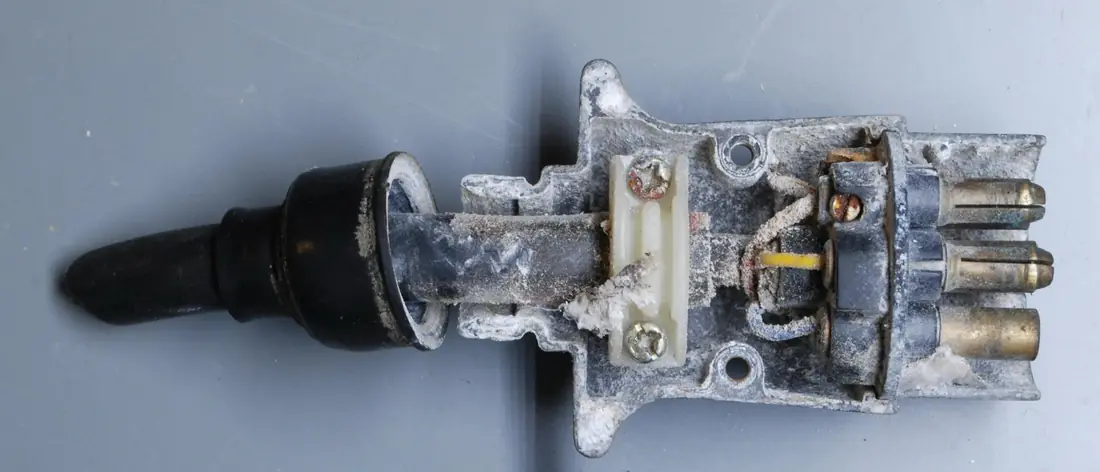

A failed brake or light circuit is also a roadside inspection problem for commercial users. A full shop rewire typically runs about $1,000 to $2,500.
The cost of downtime
Downtime is the cost that doesn't appear on any invoice, and for a working business it's often the largest.
When a dump trailer is down, you either rent a replacement or move jobs. Renting a 14-foot dump trailer commonly costs about $110 to $250 per day, depending on the market, and that's if one is available when you need it. On top of that:
- Jobs get rescheduled, or go to someone else.
- You or your crew spend time arranging repairs, hauling the trailer to a shop, or waiting on parts.
- A breakdown on the road can mean a tow, and a load that has to be transferred.
A trailer from a brand with a local dealer that stocks parts and does warranty work in-house will spend fewer days down for the same failure. That's part of what a higher price buys.
Resale value
Used trailer buyers inspect the same things you should: straight frame, crack-free welds, a solid floor, a smooth hoist. A known-brand trailer with a 7-gauge floor and a clean underside sells quickly. A budget trailer with a pillowed floor, rust at the seams and patched wiring sells slowly, and for less, if it sells at all.
In 2026 listings, name-brand heavy-duty trailers a few years old often asked 60% to 90% of a comparable new price. That held value comes back to you when you sell or trade in.
A worked total cost of ownership example
The setup: a contractor buys a 7x14 dump trailer rated at 14,000 lb, uses it about three days a week hauling gravel, soil and demolition debris, and keeps it for seven years.
- Trailer A (budget build): $9,500. 10-gauge floor, crossmembers on 24-inch centers, a light frame, minimum-size scissor hoist, painted finish, unsealed wiring, 1-year warranty.
- Trailer B (heavy-duty build): $13,000. 7-gauge floor, crossmembers on 16-inch centers, an 8-inch I-beam frame, a scissor hoist sized with margin, powder coat over primer, sealed harness, 3-year structural warranty.
Costs that are about the same for both trailers are left out: registration, insurance, tires, battery and routine bearing service.
Scenario 1: typical contractor use
| Cost over 7 years | Trailer A (budget) | Trailer B (heavy-duty) |
|---|---|---|
| Purchase price | $9,500 | $13,000 |
| Pump motor replacement (parts and labor) | $450 | $450 |
| Scissor cylinder replacement (parts and labor) | $750 | Not needed |
| Rewire (shop) | $1,200 | Not needed |
| Crossmember and floor repair (welding shop) | $900 | Not needed |
| Partial blast and recoat | $1,500 | Not needed |
| Downtime (replacement rental at $175/day) | 6 days = $1,050 | 2 days = $350 |
| Resale after 7 years (assumed) | −$3,325 (35%) | −$6,500 (50%) |
| Net cost of ownership | $12,025 | $7,300 |
| Net cost per year | About $1,720 | About $1,040 |
In this scenario, Trailer B costs about $4,700 less over seven years, even though it cost $3,500 more on the day it was bought. Most of the difference comes from three things: repairs that the heavier build avoided, fewer days without a trailer, and higher resale.
Scenario 2: light use, nothing breaks
Now assume the trailer only hauls mulch and yard waste a few times a month. Neither trailer needs a repair beyond routine maintenance, and there's no meaningful downtime. Because the budget trailer isn't worn out, we assume it resells at 45% instead of 35%.
| Cost over 7 years | Trailer A (budget) | Trailer B (heavy-duty) |
|---|---|---|
| Purchase price | $9,500 | $13,000 |
| Repairs and downtime | $0 | $0 |
| Resale after 7 years (assumed) | −$4,275 (45%) | −$6,500 (50%) |
| Net cost of ownership | $5,225 | $6,500 |
Here the budget trailer comes out about $1,300 ahead, because the extra steel and better components never get a chance to pay for themselves. That's the honest picture: build quality pays off in proportion to how hard you work the trailer.
When a cheap dump trailer is the right call
A budget trailer can make sense when:
- You'll use it occasionally, for light material like mulch, leaves, brush or household cleanout.
- You'll keep it under cover and maintain it.
- You'll stay well under its rated payload.
- You can live without it for a week if something breaks.
If that's you, spend the savings on a good battery, a tarp and a spare tire. And if you'd only use a trailer a handful of days a year, renting may beat buying any trailer. See how much a dump trailer costs for rental-versus-buy math.
If you're loading with machines, hauling rock or concrete, or relying on the trailer to earn money every week, the case flips. The dump trailer buying guide walks through which specs to prioritize, and best heavy-duty dump trailers compares published specs across major brands.
The bottom line
A cheap dump trailer isn't cheap if it bends, cracks, leaks or rusts while you're trying to work. For heavy, frequent use, a stronger floor, closer crossmembers, a properly sized hoist, sealed wiring and good coating prep usually cost less over the life of the trailer. That's because of fewer repairs, less downtime and better resale. For light, occasional use, the budget trailer can be the smart buy. Match the build to the work.
Frequently asked questions
Is a cheap dump trailer worth it?
For occasional use with light material like mulch and yard waste, often yes. For daily contractor use with rock, concrete or demolition debris, the savings at purchase are usually lost to repairs, downtime and lower resale.
What fails first on a cheap dump trailer?
The usual early failures are wiring and lights (corroded splices), hydraulics (pump motors and cylinder seals on undersized systems), and rust where coating prep was minimal. Under heavy use, thin floors pillow and light crossmembers bend.
How much does dump trailer downtime cost?
At minimum, the cost of renting a replacement, which runs about $110 to $250 a day for a 14-foot dump trailer. Add lost or rescheduled jobs, your time arranging repairs, and possibly towing. For a busy crew, a week of downtime can cost more than the price difference between trailers.
Do better-built dump trailers hold their value?
Generally, yes. Buyers of used trailers look at the frame, floor and hoist, and a straight, crack-free trailer with a 7-gauge floor and a known brand sells faster and for more than a tired budget trailer of the same age.
How can I tell if a dump trailer is well built?
Check the floor gauge, main beam size and crossmember spacing, the hoist cylinder size, axle and tire ratings, whether the wiring harness is sealed, how the coating was applied, the weld quality at crossmembers and hoist mounts, and the length and terms of the structural warranty.
Share this guide
Link to this guide
Writing about dump trailers? You're welcome to quote this guide and link to it. Copy whichever format you need.
- URL
- https://stranktrailers.com/guides/why-cheap-dump-trailers-cost-more
- HTML link
- <a href="https://stranktrailers.com/guides/why-cheap-dump-trailers-cost-more">Why Cheap Dump Trailers Cost More</a> (Strank Trailers)
- Citation
- Strank Trailers. "Why Cheap Dump Trailers Cost More." stranktrailers.com, October 28, 2026. https://stranktrailers.com/guides/why-cheap-dump-trailers-cost-more
Keep reading
Specs · 10 min read
Dump Trailer Steel Gauge Explained
Dump trailer steel gauge explained: 14, 12, 10, and 7 gauge in inches and pounds, what builders use for floors and sides, and why floor gauge matters most.
Specs · 15 min read
How to Judge Weld Quality on a Trailer
How to judge weld quality on a trailer: spot undercut, porosity, cold lap, and cracks, find the welds that matter most, and know what to ask the builder.
Specs · 9 min read
Powder Coat vs. Paint vs. Galvanized
Powder coat vs. paint vs. galvanized dump trailers: how each finish is applied, why surface prep matters most, where rust starts first, and what road salt does.